Sometimes, one of the simplest indicators of your health isn’t found in a lab test or on a scale – it’s right around your waist. Waist circumference is one of the most powerful predictors of your risk for metabolic syndrome, a cluster of conditions that can shorten life expectancy and lead to chronic disease.
While Body Mass Index (BMI) has long been used as a marker for a healthy height-to-weight ratio, research shows that abdominal fat – especially fat stored deep around the organs (known as visceral fat) – is a better indicator for health. Unlike subcutaneous fat (the kind you can pinch), visceral fat is metabolically active, meaning it influences the body’s metabolism – the system of chemical reactions that convert food into energy and regulate blood sugar, hormones, and fat storage. It can release inflammation-triggering molecules and hormones that disrupt how your body regulates blood sugar, hunger, and energy balance, eventually increasing risk for developing type 2 diabetes, heart disease, stroke, Alzheimer’s disease, and non-alcoholic fatty liver disease.
As a general rule, it’s best to keep your waist circumference to less than half your height. For example, if your height is 65 inches, then your waist circumference should be no more than 32.5 inches. To measure your waist circumference accurately, stand up straight and place a flexible measuring tape around your abdomen at the level of your umbilicus (belly button). Make sure the tape is horizontal, snug but not tight, and that it lies flat against your skin or over a thin layer of clothing. Exhale naturally before taking the measurement – don’t suck in your stomach. The number where the ends of the tape meet is your waist circumference.
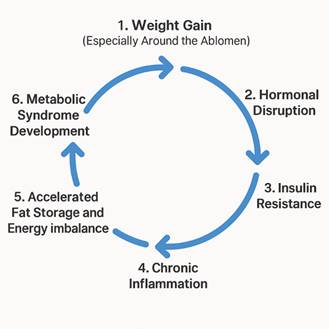
The Cascade to Metabolic Dysfunction
Metabolic syndrome doesn’t develop overnight. It’s mainly the result of long-term lifestyle and environmental influences. Each component tends to drive the others, resulting in a perpetual loop of metabolic dysfunction and disease promotion.
1. Weight Gain (Especially Around the Abdomen):
Excess calories, stress, poor sleep, and inactivity cause fat to accumulate – particularly visceral fat deep around the organs.
2. Hormonal Disruption:
Fat cells release inflammatory chemicals cytokines (which trigger inflammation), as well as hormones such as leptin (which signals fullness), resistin (which reduces insulinsensitivity), and cortisol (the body’s main stress hormone), all of which, when normal release is interrupted, interfere with appetite control, metabolism, and blood sugar regulation.
3. Insulin Resistance:
As cells become less responsive to insulin, blood sugar levels rise. The pancreas produces more insulin to compensate, driving even more fat storage – especially in the belly.
4. Chronic Inflammation:
Visceral fat acts like an inflamed organ, sending distress signals throughout the body. This low-grade, constant inflammation damages blood vessels and impairs energy metabolism.
5. Accelerated Fat Storage and Energy Imbalance:
Because insulin levels stay elevated, the body stores more energy as fat instead of burning it efficiently. Insulin’s job is to move glucose from the blood into cells for energy – but when there’s more glucose than the body needs, insulin signals the liver to convert the excess into fat for storage. Over time, this constant “fat-storing mode” makes weight loss increasingly difficult.
6. Metabolic Syndrome Development:
Over time, this hormonal and cellular imbalance leads to elevated blood sugar (as cells become resistant to insulin), high triglycerides (as excess sugar is converted into fat in the liver), low HDL cholesterol (the “good” cholesterol that helps clear fat from the bloodstream), and high blood pressure (as insulin resistance and inflammation cause the blood vessels to stiffen and retain more fluid)—the key signs of metabolic syndrome.
To be diagnosed with metabolic syndrome, a person typically has three or more of the following five risk factors:
- Abdominal obesity – A waist circumference greater than 40 inches in men or 35 inches in women.
- Elevated fasting blood glucose – 100 mg/dL or higher.
- High triglycerides – Levels above 150 mg/dL.
- Low HDL cholesterol – Less than 40 mg/dL in men or 50 mg/dL in women.
- High blood pressure – Readings consistently at or above 130/85 mmHg.
The Hidden Dangers: Chronic Diseases Linked to Metabolic Syndrome
People with metabolic syndrome have a 50% higher risk of early death compared to those without it. The combination of inflammation, oxidative stress, and insulin resistance accelerates cellular aging and damages organs throughout the body.
Beyond reducing lifespan, metabolic syndrome also shortens healthspan – the number of years lived in good health. Fatigue, cognitive decline, and reduced mobility often accompany the later stages of this condition, robbing individuals of energy and vitality.
Diseases linked to metabolic syndrome:
- Type 2 Diabetes: insulin resistance is at the core of metabolic syndrome. Over time, cells stop responding to insulin, forcing the pancreas to produce more. Eventually, blood sugar rises beyond control, leading to type 2 diabetes.
- Cardiovascular Disease (Heart Disease and Stroke): high blood pressure, elevated triglycerides, and low HDL cholesterol—common features of metabolic syndrome—damage arteries and promote plaque buildup, greatly increasing the risk of heart attack and stroke.
- Non-Alcoholic Fatty Liver Disease (NAFLD): excess fat can accumulate in the liver due to insulin resistance and high circulating triglycerides. This can progress to inflammation (non-alcoholic steatohepatitis) and even cirrhosis.
- Polycystic Ovary Syndrome (PCOS): in women, insulin resistance and hormonal imbalance can contribute to PCOS, which causes irregular menstrual cycles, infertility, and metabolic complications.
- Chronic Kidney Disease (CKD): high blood pressure, inflammation, and diabetes—often linked to metabolic syndrome—can damage kidney function over time.
- Alzheimer’s Disease and Cognitive Decline: insulin resistance and chronic inflammation affect brain metabolism, earning Alzheimer’s the nickname “type 3 diabetes.”
- Sleep Apnea: central obesity increases the likelihood of sleep apnea, which in turn raises stress hormones and worsens insulin resistance, creating another self-perpetuating cycle.
- Certain Cancers: chronic inflammation and high insulin levels have been linked to increased risks of colorectal, pancreatic, and breast cancers.
Break the Cycle
The good news is that this cycle can be broken and is largely reversible. By adopting sustainable lifestyle changes, you can restore metabolic balance and protect your long-term health.
- Limit Carbohydrate Intake and Choose a Low-Glycemic, Whole-Food Diet:
- Increase vegetables, lean proteins, nuts, seeds, and healthy fats (olive oil, avocado).
- Avoid added sugars, refined grains, and processed foods.
- Limit carbohydrate intake to less than 150 grams per day choosing complex carbs like quinoa and lentils.
- Move Your Body Daily:
- Aim for 150 minutes of moderate exercise per week plus 2 – 3 days of resistance training.
- Building muscle enhances insulin sensitivity even at rest.
- Manage Stress:
- Practice deep breathing techniques and mindfulness, yoga, meditation, or outdoor activities to reduce cortisol.
- Prioritize Quality Sleep:
- Strive for 7–9 hours nightly. Sleep regulates hunger and metabolism.
- Limit Alcohol and Quit Smoking:
- Both increase inflammation and cardiovascular risk.
- Track Progress:
- Monitor waist circumference, fasting glucose, blood pressure, and lipid levels to see real improvements.
The Empowering Truth
Your waistline can tell a story about your metabolic health and whether you may have metabolic syndrome. Metabolic syndrome, while it is a modern epidemic – not a life sentence. Through better nutrition, movement, and stress balance, shrinking your waistline is a powerful sign that your body is healing from within, restoring energy and vitality. Your health isn’t defined by past habits – it’s shaped by the choices you make today. Every small change counts, and together, those changes can add years to your life and life to your years.